Showing posts with label The Travel Essentials - Do your Homework. Show all posts

Confused about Adapters for Travelling?

An adapter will allow you only to plug your appliance into another type of outlet. It will not change the electrical voltage. Here are the most common kinds of adapters used worldwide?

Used in North America ( including Canada), Mexico, Guatemala, Jamaica and Venezuala, Vietnam


Used in North Amercia ( including Canada), Mexico, Guatemala, Jamaica and Venezuala


Used in Continental Europe and South Africa.

Used in India and South Africa

Used in France and Belgium


Used Germany, Austria, the Netherlands, Sweden and Norway.


Used in Great Britain, Singapore and Indonesia


Used in Australia


Used in Israel
Used in Denmark

Used in Switzerland

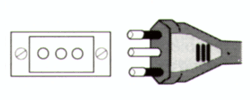
Used in Italy

Still Confused?(like i am). Try this....
The Travelling Adapter!


Stumble Upon Toolbar

Are Budget Airlines Safe?


In a word: yes. Just because budget airlines charge cheap fares, it doesn’t mean they compromise on safety to save costs. In fact, budget airlines are arguably safer than many of their traditional "full service" airline competitors for a number of reasons:

- Brand New Planes

Most budget airlines only came into existence in the last decade, and as a result have some of the newest models of airplanes currently in service which have the latest safety mechanisms and procedures.

- Streamlined maintenance

As well as having new planes, budget airlines also typically use only one model of plane. The Boeing 737 is the most popular aircraft used by low cost carriers around the world. By only having one model of aircraft in their fleet, budget airlines streamline their maintenance and repair costs and make staff training much easier, rather than having several different types of older airplane in a legacy fleet to maintain, each with their own idiosyncrasies.

- Keeping A Flawless Safety Record

The perception that budget flights are inherently less safe than full service flights is a difficult one for low cost carriers to erase, so budget airlines are hyper sensitive about maintaining their reputation and flight safety record. They realize that an accident would be a disaster for their company in every sense of the word. As such, budget airlines strive to have flawless safety records rather than considering any compromise on safety in order to cut costs.

The world’s oldest budget airline, America’s Southwest, has never had a crash in 40 years of operation – that’s over 12 million flights. South West pioneered much of the uniform way of running an airline with the same planes and streamlined procedures which has been adopted as the blueprint for virtually every other budget airline. The UK’s two biggest budget flight operators, Ryanair and Easyjet, have also never suffered a crash throughout their company history.

Sources: http://www.budgetairlineguide.com/

Stumble Upon Toolbar

Do You Know Your Rights When You Get Bumped Off From a Confirmed Seat?

What does being bumped off a flight mean?

It means being asked ( or persuaded) to get off a flight voluntarily or involuntarily due to airlines overselling airline seats. For those who have never experienced being bumped off before, below are the recent statistics on just what the probability is of being bumped off. ( Based on US airlines only).

So Just how do you reduce the likelihood of being bumped off?

1) Get to the gate early. Airline rules typically state that if you don't arrive at least 10 - 20 minutes before the scheduled departure, you will forfeit your reservation and too bad for you..

2) Try not to take routes frequented by business travelers, particularly those on Monday mornings and the hours between 4 p.m. and 7 p.m. on weekdays.

3)Demand for departures after noon on Fridays or on Sunday evenings are also high and therefore the likelihood of being bumped off is higher.

4)Also routes that have scant nonstop or direct service with no change of planes are very likely candidates for bumping people off.

5)To be extra sure ( Kiasu..)Be at the gate before the majority of the passengers have checked in, your chances of retaining your original reservation are favorable.

Bumped off? Know your rights...
Airlines willl try to seek out volunteers. Such volunteers can receive lucrative rewards, from cash to free air vouchers. In general, the longer the delay to the next flight, the better the payoff, and if the airline cannot secure enough volunteers to forfeit their seats the first time around, the payoff will generally increase as the flight nears take-off time and the airline grows more desperate to empty seats. Some airlines will even offer meals, free drink coupons, free headsets on the next flight, an upgrade to first-class, a free long-distance phone call or admission into the swanky airline clubs. So be sure to try your luck in asking for more perks....

If the airlines is not able to secure any enough volunteers, they will have to compensate. Under the new rule by the U.S Department of Transportation which goes into effect in May 2008, fliers who are involuntarily bumped would receive up to $400 if they are rescheduled to reach their destination within two hours of their original arrival time or four hours for international flights, and up to $800 if they are not rerouted within that timeframe. The amount of these payments are determined by the price of the ticket and the length of the delay, and are in addition to the value of the passenger’s ticket, which the flyer can use for alternate transportation or have refunded if not used.Please note that the above applies to those operated with aircraft seating 30 people or more and that it may not apply in non-US jurisdiction. (Anyway, it would be good to know the industry norm..right..)

Stumble Upon Toolbar

Guidelines implementation for Liquids, Aerosols and Gels in Singapore

From 8 May 2007, Singapore is implementing new guidelines that restrict the amount of Liquids, Aerosols and Gels in hand-carry luggage. The guidelines apply to all flights departing Singapore.

Passengers are advised to check-in all Liquids, Aerosols and Gels that do not meet the new guidelines:

  • Liquids, Aerosols and Gels must be in containers with maximum capacity of 100ml
  • Containers must be placed in a 1 litre transparent re-sealable plastic bag
  • The re-sealable plastic bag must be completely closed
  • One re-sealable plastic bag allowed per person
  • The re-sealable plastic bag must be presented seperately at the security screening point
  • Exemptions made for medications, baby food and special dietary items

Liquids, Aerosols and Gel include:

  • Drinks, Soups and sauces
  • Perfumes and deodorants
  • Creams, balms, lotions and oils
  • Mascara and lip gloss
  • Toothpaste
  • Shaving foam and hairspray
  • Hair and shower gels
  • Contact lens solution
Taken from the great folks at: www.airserve.com.sg

Stumble Upon Toolbar

How to be a Lightweight Traveller.

It is almost always best to travel light, so that you can avoid unnecessary delays, and get to your destination most efficiently.

1)Get a small bag. The bag should be lightweight and easy to carry. It is helpful to have a bag that can be carried as a backpack, or as a shoulder bag depending on the circumstances. It is also handy if it has wheels.

2)Check the weather report of your destination, so that you know what type of clothing to bring with you. For example, If it is going to be sunny, then bring a hat, etc. Plan your wardrobe so that everything matches with everything else. A good suggestion would be to follow a minimalist approach to fashion, such as bringing single coloured clothings as these are easy to match. One skirt and a single pair of trousers can be matched with a t-shirt, a blouse or a tank top to make six different outfits--plenty of clothes for a week journey. You can get fancy with a scarf, bandanna or a cap. Also, be sure you have appropriate clothing for area you are visiting.

3)Bring enough underwear and socks so that not much laundering is needed. And, bring laundry supplies, if you are planning on doing laundry. (Note: just put enough dry detergent in a ziplock bag for as many loads as you plan to do--don't bring the whole box.). Wisely choose clothing materials that dry quickly, such as Nycott, Polyester or alternative eco material, such as Soy so you only need a few pairs. If you hate doing laundering ( like me!), consider investing in anti-microbial clothing, so you won't stink that much.

4)Bring at least two pairs of shoes that you can walk in comfortably. I also suggest bringing a fun or fancy pair of shoes, in case you want to go someplace like a club, a fancy dinner, or the opera. You never know who you may meet!

5)Consider your packing space carefully. Put items inside of other items, like putting some items in your shoes. Roll clothes into small rolls can also prevent wrinking. Invest in wrinkle resistant clothings so you can squeeze them tight into your bag without looking shabby later.

6)If you have special supplies or equipment that you need to have with you and they are heavy, a way is to have these items sent ahead of you to your hotel or home stay where you can meet them later.

7) Keep necessary items you need in the top of your bag or in a separate hand bag, because you never know what may happen when you travel. As well, carry any valuables with you in this bag .Keep your ID, money, credit cards, in a security pouch or in secret, zipped pockets of your clothings. Keep some small currency in your pocket for little purchases (rather than pulling out everything each time). Carry photocopies of your ID, visas, and credit cards with you but in a separate compartment from the real ones (the idea being that if you lose one, you still have the other). Copies can also be scanned and kept on a USB thumb drive (possibly encrypted). Consider 'buddy packing' where your travel partner keeps your important photocopies and you keep theirs.

8)Not all clothings are created equal for travelling. Some clothings are designed to be light weight. When travelling to cold places, consider warm clothes that have a high warmth to weight ratio.

Other Travel Tips
-Instead of bringing liquid based insect repellent that are heavy and subjected to air line regulatory restrictions, get those non-liquid based ones or even investing in insect repellent clothing.

- Always have extra quart size ziploc bags (for various uses) and a plastic shopping bag in case your clothes get wet and you cant dry them before you pack again.

-Carry a bag of nuts. You never know when you might be on a long train ride with ridiculously expensive food. Nuts are good for you, non perishable and they satiate your hunger.

-Avoid bringing things that you "might" need, simply because you really like them. If you know that you are going to be hiking across Central America, and camping in the outback, then you probably are not going to need that fabulous Betsy Johnson empire mini dress. Take a photo of it, and bring it with you. You can look at it while you are in the outback to remind you of more glamorous times that you will revisit when you return.

-Last but not least,if your bag feels heavy while you are carrying it out of your house, then you have too much stuff.

Stumble Upon Toolbar

A Friend of Eco Sports International

Jump to TOP

A Friend of Eco Sports International